
The Importance of Pre-Hunt Planning: Access, Regulations and Ethical Considerations
Going on a hunting trip needs more than getting your gear ready; it needs a good understanding of the place you are going to visit. Before you start your adventure make sure the place you are going to is really open. Follows the rules in that area. It is important to remember that places you have been to before can change in ways that're not obvious. For example a place you know well might have rules roads could be closed for repairs or the people who own the land might be different. A simple check can help make your hunt respect the land and protect the animals. Think of each part. The route, the permissions, the rules and the way to leave. As things to carry with you not things to think about when you get there.
Understand Land Management and Ownership
Start by finding out who is in charge of the land you are going to travel through. Just because a map shows public land does not mean every road or path is open for you. Private places often need permission either by speaking or writing and there might be rules about how you can use the land.
Get the recent and official sources of information. Learn about the hunting rules, access information and maps. Make sure any digital files or printed maps you use are up to date. Laws about permits, how to hunt, when it is allowed and what equipment is needed can be different in each state and even in local areas. If you find information it is better to stop and ask the right people for help.
Analyze Your Path, Not the Destination
Take time to look closely at how you will get to where you want to go. It is important to find the road that takes you to the place where you can legally turn off as well as the parking spots and any lines that tell where you can walk. Satellite pictures can help,. They may not show if the way is allowed. Don't block gates or make marks in soft areas; spending a few more minutes walking can help the land and your relationship with the people who own it.
Be careful with gates; they might not mean you can go through. Think about why these gatesre there as they might be for animals or other jobs. Read any signs from a distance where you are still following the rules; write down what you see for later.
Visibility of Boundaries Matters
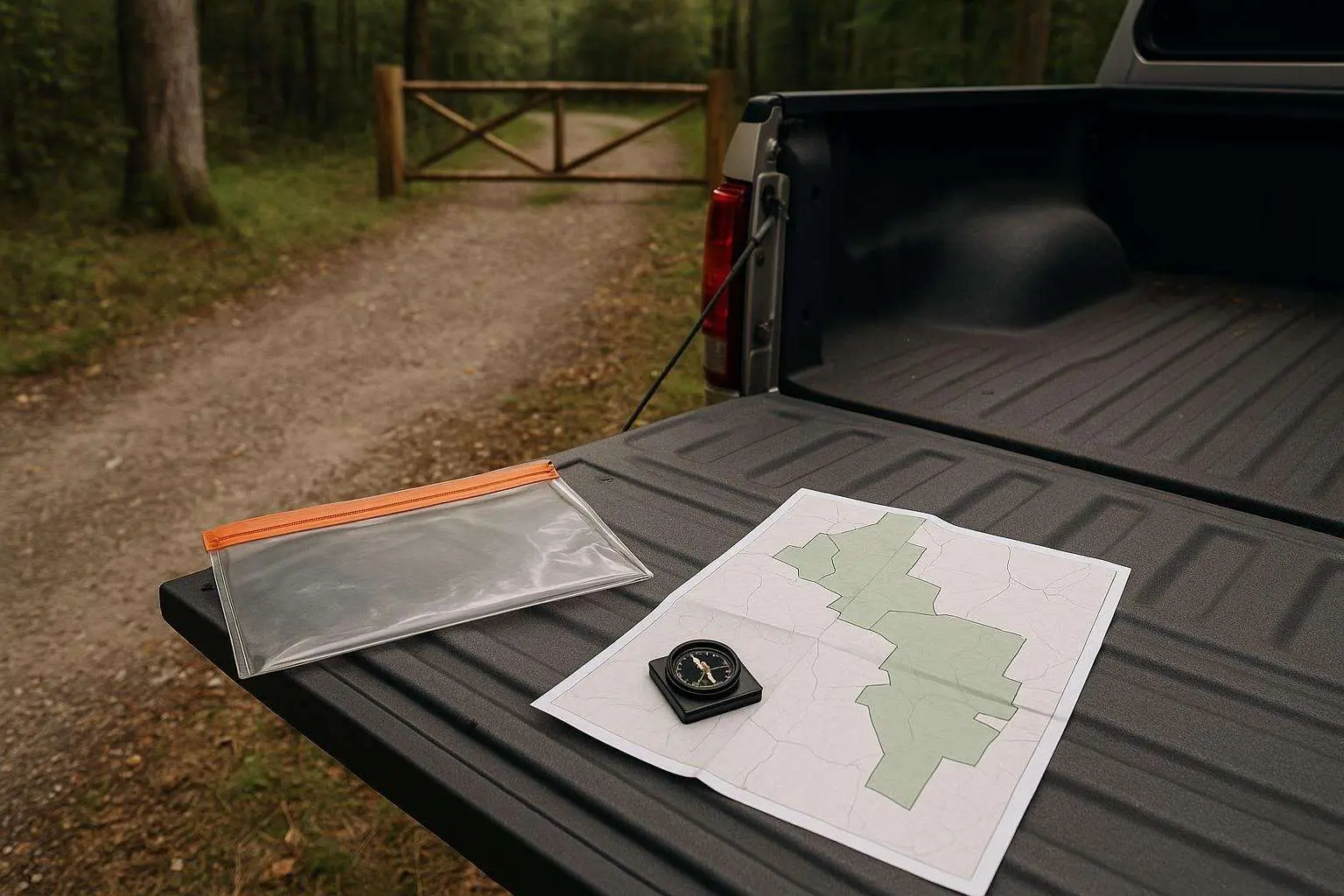
It is easy to make a mistake about where the linesre when you can't see them well because of trees, snow, fog or dark. Make sure you have a map that works without internet and has details like where the land ends, where water crosses and where it is not allowed. Keep your tools ready; a compass is helpful. It can't replace clear permission and the latest land details.
When you are near the lines be careful with how you move. Don't make guesses based on trails or unclear signs. Ethical hunting means thinking going back or changing your plans if you are not sure instead of accidentally going onto someone else's land.
Organize Your Documentation
Put all the papers into one place that won't get wet like a special bag or a digital folder. This might be your hunting permit, the tags or papers you need copies of the rules for that place and any permission the landowners give you. Make sure everything is current and check for signatures, dates and any other details you need for your trip.
Here is a list to help you get ready:
– Current hunting permit and all the tags or papers needed
– A copy of the rules or notices for the area
– Written permission from landowners if needed
– Maps that show the lines the places to go and the way to leave
– A pen, a phone charger and a way to write down what you catch
– Phone numbers for people who manage the land or look after the animals
Be aware that the rules might change, about electronic documents or telling about what you catch right away. Always check what you need before you leave. If you can't show that you have the right to be on the land or to take the animal you want you need to think about what you are doing.
Consider Your Departure Strategy
Planning for how you will leave is part of getting ready for a hunting trip for the animal you catch your gear and the things you leave behind. Make plans that don't accidentally break the rules or block people. If the weather or the conditions change know the safe. Allowed ways to go back instead of just taking the shortest way.
Know the area around you. Things like cutting down trees moving animals or other people using the land can change access even if the official rules say it is okay. Park your car in a way that lets farmers move their things and treat any gates you pass as you found them. Close them to stop animals from being disturbed. Your effort to leave no damage is not just good for others to see; it helps keep the land open for everyone.
Know When to Turn Back
Deciding to stop a plan can be one of the choices. An old permit, a missing signature or confusing rules can cause problems like getting in trouble or making your hunt hard. It can also hurt people's trust in hunters.
Set a rule: if anything about being on the land having permission or staying safe is not clear move to a different place or change your trip. Think of this as not losing an opportunity but as being responsible when you're out in nature. This helps you have a time and learn more for the future. Always check the rules and the places you can go closer, to when you leave and again when you get there to avoid surprises that could cause problems.